Tété is a self-taught guitarist and Folk-Pop singer-songwriter. He draws on French and English-language Pop (particularly the Beatles). He’s a critics’ darling and one of French music’s most beloved stars. 
He might not have the superstar status of Christophe Maé, but he should. A road musician first and foremost, he’s spent much of his professional career under the radar. But he’s definitely a French artist to know.
He’s been compared to a lot of different artists, but in my opinion, the big draw is that blends the acoustic Soul-Folk of Ben Harper or Amos Lee with catchy, melodic elements that give him Pop appeal.
Tété Niang was born in Senegal, but moved to France at the age of 2 after his Senegalese father and Martiniquais mother divorced. His mother’s collection of The Beatles, Bob Dylan, and John Coltrane and Miles Davis records provided his early music influences. At 9, he briefly took up the violin. But it was his mother who sealed his fate when she gave him a guitar at 15, so he’d have something to keep him occupied while recovering from a broken leg.
Inspired by guitarists like Dylan, Jimi Hendrix, Lenny Kravitz, he began composing many of his first songs in English — which he learned to speak by listening to The Beatles. He emulated Nigerian Folk singer-songwriter Keziah Jones, whom he credits with giving him the confidence to explore Folk as a young Black performer.
He began performing in the bar and club circuit in Northeast France. In 1998, he moved to Paris, busked on street corners and in the Metro, and played the bar scene, building up an enthusiastic fan base through his live shows. He released a demo in 1999, which generated industry interest, and which the French music chain FNAC decided to distribute. He formed a trio with a drummer and bassist, and Sony triumphed in the bidding war to sign them.
Critics raved about the songwriting skill, inventiveness, and unique mix of Folk, Blues, Soul, Pop, and Chanson Française showcased on the singer’s first official EP, Préambule, released in 2000. I myself am a sucker for his harmonies, smooth vocals, and skillfully deployed falsetto.
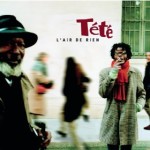 L’air de rien
Tété’s debut album, L’air de rien, was released in 2001. Like a modern-day troubadour, he penned lyrics documenting scenes from everyday life. L’air was nominated for a Victoire de la Musique (French Grammy) in 2002 for Album Decouverte (Best Album by a new artist).
Download: The whole album. C’mon people! My favorites are “Le Meilleur Des Mondes,” “Le Bonheur,” “Me Ressourcer,” “Passage Brady,” “Love Love Love,” “L’air de Rien,” “Honni Soit,” and “Les Envies,” and the bluesy remake of The Beatles’ “Eleanor Rigby,” but with a list that long, you might as well get the whole thing.
Check out the video for “Le Magicien,” with handy French cue cards held by the singer himself:
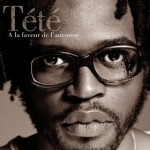 À la faveur de l’automne
Tété’s 2003 sophomore album marked his breakthrough as a mainstream artist. He got radio airplay with the singles “Emma Stanton,” and the title track, “A la Faveur de l’Automne,” and more listeners than ever got a taste of his music.
It was during this media push that I discovered his music on a display in FNAC. I bought his first two albums on sight, despite having never heard of him before, and I’ve been a fan ever since. À la faveur de l’automne earned the singer Victoire de la musique nominations for Best Album by a New Artist and or Best New Artist on Stage (in concert).
Download: My personal favorite tracks are “À La Faveur De L’Automne,” “Emma Stanton,” “Montréal,” ” Je L’Appelle De Mes Voeux,” “La Purdeur,” “La Tchave,” “Routine,” and “Ces Grands Moments De Solitude,” but again, when the list starts getting this long, it’s best to just get the whole album.
Here’s the title track:
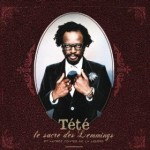 Le Sacre Des Lemmings Et Autres Contes De La Lisiere
Also called “Le Sacre des Lemmings” for short, this 2006 album is where Tété spreads his wings a bit. His third studio album is less acoustic, featuring more orchestration than his previous work. He takes musical risks that pay off, like on the Latin-tinged “A la vie a la mort” and “Mon trésor,” without alienating longtime fans of his “Pop-Blues” style.
This is also his most commercially successful album to date, reaching number 5 and staying on the charts for 75 weeks. He also scored a Gold single with “Films de Cham.”
Download: If you’re a fan, get the whole album. If you’re looking for some tracks to start with, try “Fils de Cham,” “Comme feuillets au vent,” “Caroline (Oh Yeah Hey!),” “A la vie a la mort,” “A flanc de certitudes,” and “La croisée des chemins.”
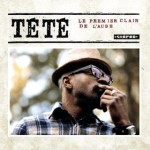 Le premier clair de l’aube
The singer’s fourth album brought us more Folk, more Blues, more Blues-Folk-Pop, and more of his genre-swirling style overall. Recorded in Portland with American musicians, this project has underpinnings of Delta Blues, Roots, and a little bit of Country. That’s not really my cup of tea, but thankfully, there’s still plenty of acoustic stuff to keep me happy.
Download: “L’envie Et Le Dédain,” “Les Temps Égarés,” “Le Premier Clair De L’aube,” “Petite Chanson”
 Nu là-bas
If I had to pinpoint a recurring theme for Tété’s latest album, it would be Doo Wop. Like the previous two albums, the experimental sound doesn’t overwhelm the whole project. Its influence is apparent on tracks like “A l’ancienne” and “A cour ou jardin.” There’s also some Beatles-inspired stuff, his signature Acoustic Folk-Pop and more, marking another excellent outing for the singer-songwriter.
Download: “Nu là-bas,” “Ritournelle,” “Comment te dire,” “Houston,” “De ce côté-ci du bonheur,” “à l’ancienne”
From his latest studio album, here’s the video for “Ritournelle.”
Having earned his rightful place as one of France’s top performers, the singer can be found lending his talents to other projects, such as Joyce Jonathan’s debut album and the children’s musical, Le Soldat Rose 2.
What do you think about this artist? Leave a comment below.
 POSTED UNDER:
Thank you so much, means a lot!
He sounds like a really good French musician